

Q Tani: White Porcelain Tea Bowl
Q Tani: White Porcelain Tea Bowl
A white porcelain (hakuji) tea bowl by Shigaraki-based ceramic artist Q Tani.
Although Q Tani mainly creates unglazed, high-fired stoneware (yakishime), in recent years, white porcelain (hakuji; glazed porcelain) has been added to his lineup. It appears that he has been researching the patterns of crazing (kannyu) for many years.
From the low foot with a thin tatami-tsuki (the bottom rim of the foot), slightly leisurely wheel-thrown marks (rokuro-me) open upward while forming subtle irregularities; the rim (koen) flares slightly but stops immediately and is chamfered. In terms of the shape from the waist, a Goryeo-like atmosphere can also be felt.
In the mikomi (inside bottom), there is a relaxed, recessed cha-damari (tea pool).The wheel-throwing is done in such a way that it gradually becomes thinner from the foot toward the rim, so the bottom and around the waist have a reasonable thickness.
The transparent glaze has very delicate crazing (kannyu) all over the inside and outside, and especially in the mikomi, the crazing creates its own unique highlight (midokoro) as a landscape (keshiki).
Since it is glazed, its ease of handling as a tool is honestly an advantage. Although it is white porcelain, it is not a uniform, flawless white; it is not simple, with many variations at a fine pitch, such as having a bluish tint, ivory color, pinholes, areas where the clay texture is partially visible, and parts that seem to have been affected by ash.
The front-facing nature of the tea bowl is low, and for this publication, the first image was regarded as the front, but it would be more appropriate for the nature of this tea bowl not to obsess too much about the "front."
Ø 160 mm
H 60 mm
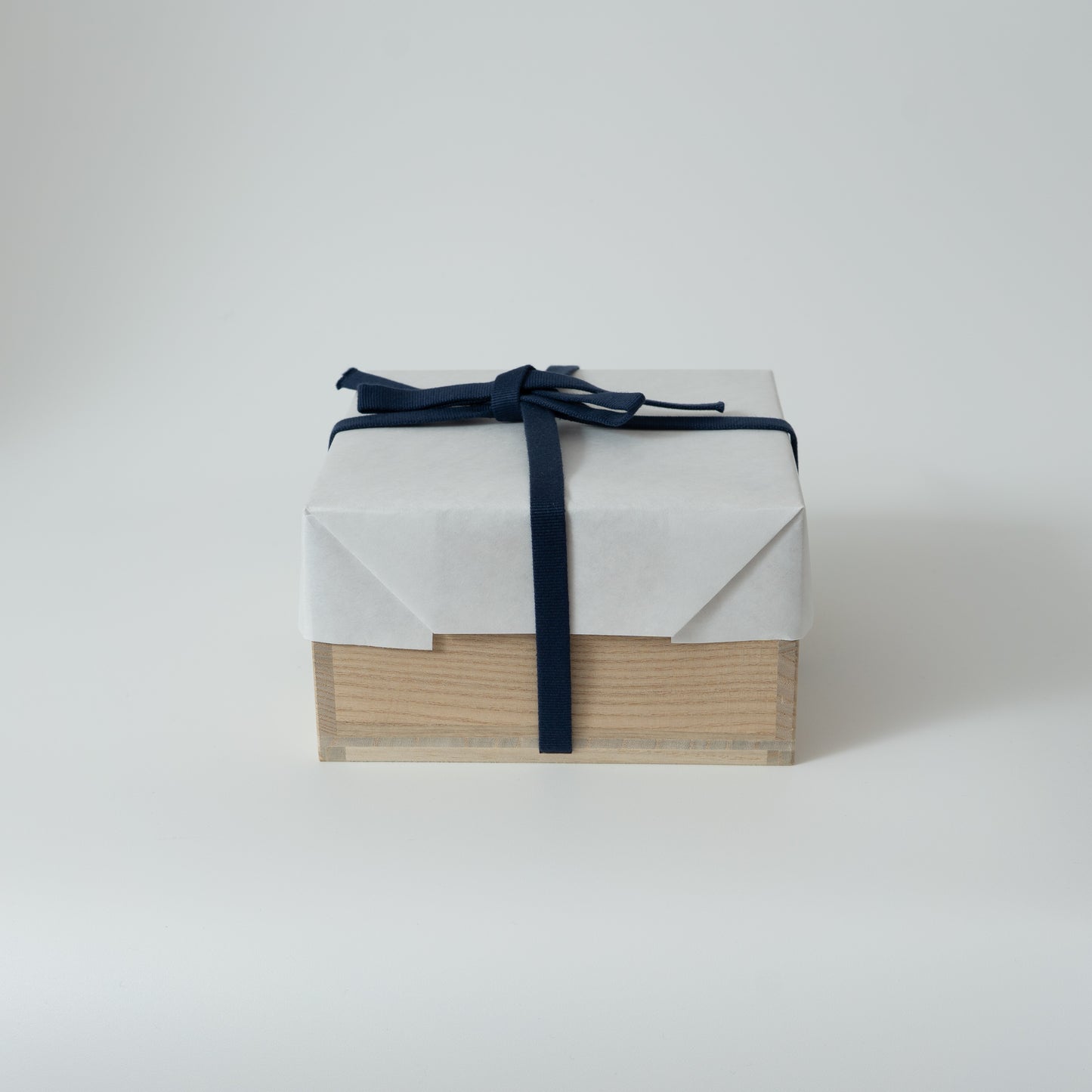
Attachment | original wooden box
Material: Porcelain with clear glaze
Country of origin: Japan
Condition: New / Unused
Ref. TQA27
趣向
Couldn't load pickup availability
Returns and exchanges are not accepted for change of mind. Damaged, defective, or incorrect items will be addressed in accordance with our policy. Returns & Refunds Policy
Prices do not include VAT or import duties.Any applicable taxes are assessed upon import and are the responsibility of the buyer.
International Shipping
International Shipping
International shipping is available primarily by EMS (Express Mail Service). Orders to the United States are currently shipped by DHL Express.
All international shipments include careful packing, tracking, and compensation or insurance coverage where applicable.
[Important Note on Duties & Taxes]
Customs duties, import taxes, customs clearance fees, carrier fees, and other local charges are NOT INCLUDED in the item price or shipping cost unless explicitly stated otherwise, and are the responsibility of the recipient.
For orders to the United States, DHL may contact the recipient by email or SMS to collect applicable duties, taxes, and clearance-related fees before delivery.
Large works, multiple-item orders, or works requiring special packing may require an individual shipping quotation.
For more information, please see our Shipping Policy.
About the photographs
About the photographs
Photographs are taken in natural light.
Depending on your screen and viewing environment,
colors may appear slightly different from the actual piece.
Each work is made by hand, and variations in glaze and surface
are inherent to the process.
Differences in color or appearance arising from these conditions
are not considered defects and are not eligible for return or exchange.
In the case of significant discrepancy from the description, please contact us.